Monday, December 5, 2016

This Week's Spelling List

Unit 3: People and Nature                             
Week 1                                                                                                              
            
This week we are reading “The Gardener” by Sarah Stewart.  We will focus on some vocabulary words in this story.  It would be helpful if you will reinforce the meaning of these words at home with your child.  Also, on this newsletter you will find our spelling words for the week.  Please practice these words at home as well.  Students are expected to practice the first 15, 20, or all 25 of the words.   Be sure to refer to the spelling rule described below.  Please listen to your child read the spelling words aloud. 

Vocabulary Words:  recognizing, humor, doze, bulbs, sprouting, blooming, beauty, showers

Spelling Rule: CONTRACTIONS                 

Two words are combined and written as one, and an
apostrophe (‘) takes the place of letters that are left out. 

  1.   let’s
     2.   he’d
     3.   you’ll
     4.   can’t
     5.   I’d
     6.   you’d
     7.   haven’t
     8.   hasn’t
     9.   she’d
   10.  they’ll

11.   when’s    
   12.   we’d
   13.   they’d
   14.   wasn’t
15.   didn’t
                                                                                                                                               EXTRA CHALLENGE WORDS
 16.  should’ve
      17.  would’ve
      18.  could’ve 
      19.  needn’t 
      20.  you’ve
              EXTRA CHALLENGE
  21.   isn’t                
 22.   where’d
       23.   they’re
     *24.   their
     *25.   there  
   
   *Does not follow the spelling pattern     

Sunday, December 4, 2016

Week of November 28 - December 2

Hello 3rd Grade Families!

I hope you're all enjoying your first few days of December.  I can definitely feel the holiday spirit in the air, and I always enjoy the sounds of the holiday train drift through the neighborhood.  December in the classroom brings further exploration of geometry in math, hands-on experimentation in science, and extra winter art projects.  Just two more weeks of learning in 2016, and then we welcome new growth in 2017!  Read on for a recap of our last week in the classroom!


LITERACY
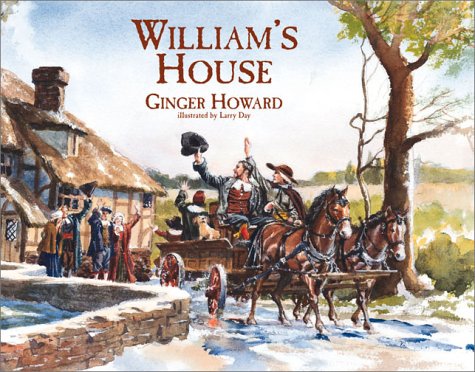
Last week we finished our final story from our Unit 2 Smart Solutions theme, titled William's House.  
                           Image result for williams house
Arriving in New England in 1637, William is determined to recreate his home in England but realizes that the climate requires modifications to it. As the seasons changed, William and his family encounter new problems in their home that require creative solutions.   

Students practiced two of our reading comprehension skills with this story as they completed their extended essay response.   They examined cause and effect relationships, as well as problems and solutions. 
                    
They worked with a partner to fill out the graphic organizer before writing their well-written paragraph in response to the following writing prompt: 

Describe the modifications William made to his home and why he had to make them.
The students then had an opportunity to type up their responses on the Chromebooks.


READER'S WORKSHOP
This week in reader's workshop students worked on a variety of skills.  


1.  Close Reading--use post-it notes to record your thinking while reading (questions, comments, reactions, connections, main ideas, etc.)             

      
These post-its then show some evidence of comprehension and the level of interaction students are having with their book.  This provides a good basis for discussion during individual reading conferences.


2.  Summarize-- Recount the main events from your reading, in the order they occurred, without retelling the whole story and giving too many details.  Include character, setting, and transition words.      
          
Some students were finishing up their book, and had to practice summarizing the whole book.


3.  Character Study-- Students who began new novels this week had the opportunity to do another character study of their main character.    
         
We will continue to develop more sophistication with these skills throughout the year.


WRITING

The class has been working hard on their first informational article.  Many students have finished drafting their body paragraphs and will be writing introduction and conclusion paragraphs this week.   Our goal is to have these articles published by winter break.


                                    MATH
This week our exploration of geometry continued as we learned about types of angles!


    Then we used our knowledge of angles to help us 
               name and classify triangles.
We can name a triangle based on 
it’s angles and sides.


                Even our November Calendar was all about shapes, 
                                
so on Wednesday and Thursday we spent time completing 
a Polygon Scoot activity.
I laid a calendar marker on each desk. The students then rotated from desk to desk in order to observe and chart the above information.

It was a great way to build up their fluency, check for understanding, and provide movement.


On Friday we examined the difference between theoretical and experimental probability as we analyzed the results of our mystery bag experiment.


After conducting the experiment for over a week, we identified the probability of getting red, blue, green and yellow.  
      
Then we emptied the contents of the bag and identified the likelihood of getting those same outcomes based on what's really in the bag.


                                       SCIENCE   


We began our week with a discussion prompted by the following question. 
This question led to an excellent classroom discussion.  Ask your child what the outcome was.


Our conversation was the perfect segue into learning that particles of matter are gaining or losing heat during any change of state.  We illustrated the diagram below in our science journals to help communicate the concept.

The students had no problem understanding this concept.   

Next, it was time to conduct our first experiment using the scientific method. 
I stressed the importance of "process" to the students, and told them that just as important as discovering what was going to happen to our "solid" when it was added to a "liquid", is the process we use to conduct the experiment.  

We took time to highlight the steps to the scientific method in our lab journal.  
             

After getting our materials, 
we read the question that our experiment is designed to answer.

Today's Question: Will the solid change when added to the liquid?

Then, we took time to observe and describe the solid and the liquid before making our hypothesis.

Once both partners were ready, they dropped the solid into the liquid, and observed and recorded what they saw.
The last step was to state whether their hypothesis was correct or not, as they wrote down their conclusion.


Our second experiment with matter was called The Melting Race.  In this experiment, students were introduced to the concept of a variable and a control.  

The question we were investigating was “Can we make an ice cube melt faster?”  Students worked in groups to devise a method for helping an ice cube melt.  The ice cube was placed in a sealed ziplock bag.  

Students were allowed to touch and handle the bag in order to help the ice melt.  Most students figured out pretty quickly that the best methods involved using their own body heat and heat generated by friction to speed up the melting process.  

       From this experiment, students learned that in order to make a reliable judgment about whether or not they did indeed speed up the melting process, they had to have something to compare their result to.   They learned that in a science experiment, this is called the control group, whereas the part of the experiment that we are changing involves a variable (something that is changed). 

Most groups successfully increased the melting rate by approximately 1 hour, by using friction or body heat to help the ice cube melt faster.  


PARENT LED ART
On Friday afternoon students completed their second parent led art session of the year.  This was the first of two clay-based lessons. The next one will involve glazing their fire-bisqued art work.


This lesson, like the one before, was inspired by Faith Ringgold, our artist focus for this year.

Students completed a clay-weaving which related to Faith's use of cloth and textiles in her art.


They each received a slab of clay which needed to be rolled out.  


Then cut into 6 equal strips.

Next, students added various textures to each strip.

Finally, they wove their strips together to make a solid clay piece.


The pieces will be ready for glaze in January or February.


Thank you parents, for helping make this lesson such a success!


IMPORTANT DATES


December 19 - Jan 2 Winter Break- NO SCHOOL

Monday, November 28, 2016

This Week's Spelling List

Unit 2: Smart Solutions                                         Week 5                                                                                                                                    
                          

This week we are reading “William’s House” by Ginger Howard.  We will focus on some vocabulary words in this story.  It would be helpful if you will reinforce the meaning of these words at home with your child.  Also, on this newsletter you will find our spelling words for the week.  Please practice these words at home as well.  Students are expected to practice the first 15, 20, or all 25 of the words.   Be sure to refer to the spelling rule described below.  Please listen to your child read the spelling words aloud.                 

Vocabulary Words:  clearing, pegs, steep, cellar, barrels, spoil

Spelling Rule:  DIGRAPHS - SH, TH, PH, CH, TCH                                                   
Words can have two or three consonants together that are pronounced as one sound:  English, father, trophy, chapter, watch.

                                                                  
  1. father
     2. chapter
     3.  other
     4.  alphabet
     5.  watch
     6.  English
     7.  weather
     8.  catch
     9.  fashion
    10. shrink

11. pitcher    
   12. flash
   13. athlete
   14.  trophy
15.  nephew


                                    CHALLENGE WORDS
 16.  northern
      17.  establish
      18.  hyphen  
      19.  challenge 
      20.  emphasis

             EXTRA CHALLENGE
  21. accomplish
 22. algorithm
      23. enchanted
      24. pharmaceutical
    25. astonished

Sunday, November 27, 2016

Week of November 21-22

Hello 3rd Grade Families!

I hope you enjoyed your Thanksgiving Holiday with your families. Last week was very short, but sweet.  Here's a recap of our two days in the classroom.


LITERACY
I took the two days outside our normal literacy routine to try something new with the students.  In order to help encourage students to think carefully while they read, we did an activity I called "Post-it Notes Make You Smart."  
Each student received a stack of post-it notes. 
While we read several short excerpts from our Reading Street Curriculum, we practiced using the post-it notes to showcase our 
thinking while reading.   
Each student created a post-it note chart 
like the one pictured, in order to learn and practice the various reading strategies.
The reading passages were brief, so we began by focusing on a different strategy for each passage.  We practiced recording our questions, comments, predictions, connections, and our reactions on post-its.  We used a symbol to show the meaning of each strategy we were practicing, and discussed why the strategy helps us comprehend what we're reading.  

This forced interaction with the text helps them engage more deeply with what they are reading, and helps make the shift from being a passive reader, to an active reader.

We had wonderful conversations, and the students practiced a valuable tool that will help each of them interact more deeply with what they are reading and improve reading comprehension.  Feel free to try this strategy at home with your child.  


WRITING
Students have been working hard planning out their first informational article.  

They spent Monday and Tuesday filling out their writing planners once they had their main idea web complete. 
       
I modeled the process of moving the topic and main ideas to the writing planner, and then think about the supporting details to include.

  
I started out with a list of keywords or phrases that relate to my main idea - what is yoga?

Then I introduced the concept of elaborating.  Too often, students create short and simple sentences from their details list. To avoid this, I showed them how I included more information about the detail in parentheses.  

                                           
This gives them plenty of information to refer to, 
to help them practice writing more complex sentences, while at the same time teaching their topic in a thorough manner.   


Some students even began working on their rough drafts.


MATH
On Monday and Tuesday we explored vocabulary relating to 
naming polygons.  

We then took a closer look at quadrilaterals, four-sided shapes, as there are many different classifications of quadrilaterals.

The students have been developing a strong understanding of these concepts so far, and are able to apply what they're learning when asked to describe any given shape.  

After taking notes on the attributes of the various quadrilaterals, we played Geometry Bingo to help reinforce the new information.  In order to identify a shape on the bingo card, I would read off an attribute of the shape and the students would have to identify which shape I am describing.  For example, "a shape with 4 congruent sides, but no right angles."


SCIENCE
In Science we continued to explore some of the science content and vocabulary before beginning our experiments with Matter.  

On Monday we read a short article titled 
"Why Does Matter Matter?" 
located in our Changes Science Journal.
          
We naturally practiced what we learned about using post-it notes to help us think while reading.


Then we spent time learning a little bit about the 
periodic table of elements.


I found a kid-friendly version of the periodic table that included a states of matter legend, making it super easy for us to identify which elements were solids, liquids, and gases.   
This version also included little illustrations of common objects made from each element.  As you can imagine, great discussions ensued!

Next week, we will discuss and illustrate the various changes of state and then begin our experiments.  


IMPORTANT REQUEST
I have been informed that all of our art projects will be photographed and printed on cards for our auction art project this year.  Unfortunately, I sent our fall tree silhouettes home the other week before learning this.  If possible, please return it to school so it can be photographed for the auction art project. 
THANK YOU!